
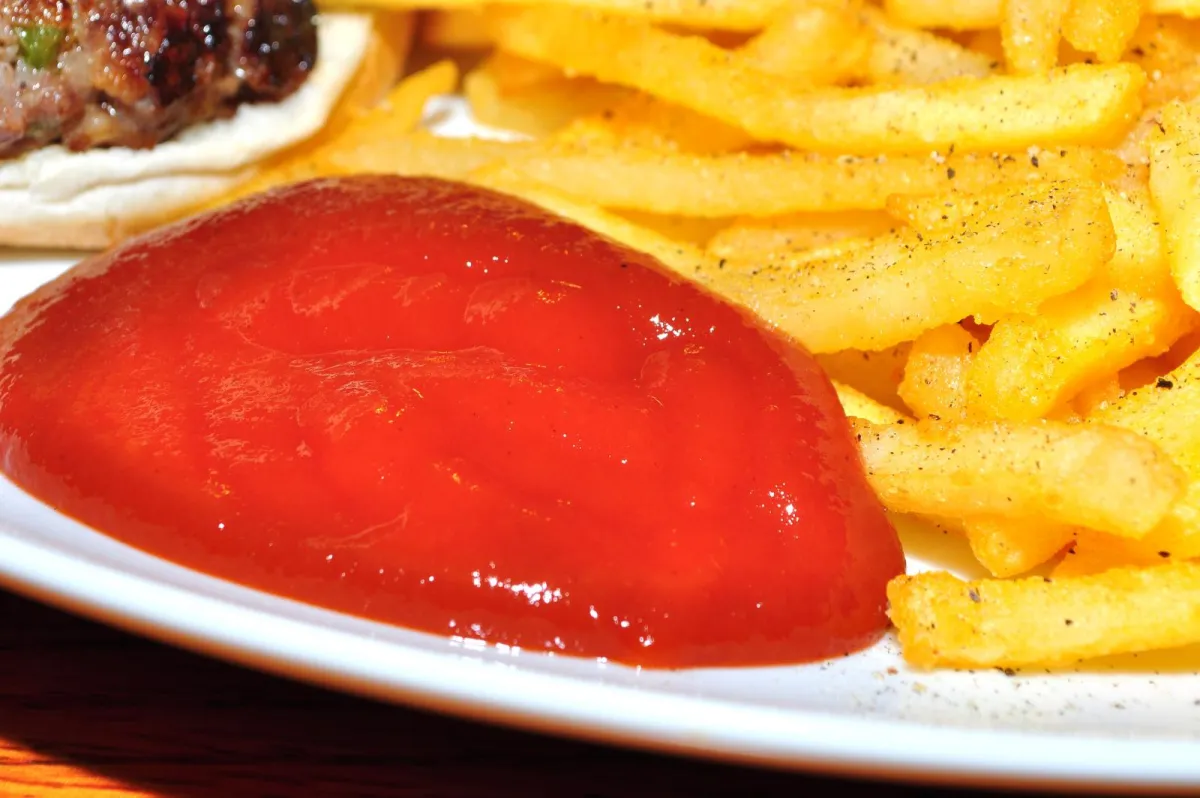
Catsup vs Ketchup Taste and Ingredients: Do They Actually Differ?
One of the most common questions in the catsup vs ketchup debate is whether the two words describe genuinely different products. Does a bottle labeled “catsup” taste different from one labeled “ketchup”? Are the catsup vs ketchup ingredients the same? In this guide we examine the recipes, the regulations, and the real-world taste-test data to settle the ketchup and catsup difference taste question once and for all.
The Standard Ingredients List

Whether the label reads “ketchup” or “catsup,” commercially produced tomato condiments in the United States almost always contain the same core ingredients:
- Tomato concentrate (from red, ripe tomatoes)
- Distilled vinegar
- High-fructose corn syrup or sugar (some organic brands use cane sugar exclusively)
- Salt
- Onion powder
- Spice blend (typically including allspice, clove, cinnamon, and celery seed)
- Natural flavoring
This recipe has been remarkably stable since the early 20th century. The ratios shift from brand to brand — Heinz is known for a slightly higher vinegar punch, while Hunt’s historically leaned sweeter — but those variations are brand differences, not “ketchup vs. catsup” differences.
What the FDA Requires
The U.S. Food and Drug Administration defines the product under 21 CFR 155.194, and it explicitly allows both the name “ketchup” and “catsup.” The standard of identity specifies minimum tomato solids content, permissible acidifying agents, sweeteners, and seasoning ingredients. There is no separate standard for products labeled “catsup” versus “ketchup.” They are, in the eyes of the federal government, the exact same product.
This means any manufacturer can print either name on the label without changing a single ingredient. The choice is purely a marketing and branding decision.
Brand-by-Brand Ingredient Comparison
To illustrate that the catsup vs ketchup taste difference is a branding myth, let us compare actual ingredient lists from well-known products:
| Brand | Label Name | Key Ingredients |
|---|---|---|
| Heinz | Ketchup | Tomato concentrate, distilled vinegar, HFCS, corn syrup, salt, spice, onion powder, natural flavoring |
| Hunt’s (pre-1988) | Catsup | Tomato concentrate, HFCS, distilled vinegar, corn syrup, salt, onion powder, spice, natural flavoring |
| Hunt’s (post-1988) | Ketchup | Tomato concentrate, HFCS, distilled vinegar, corn syrup, salt, onion powder, spice, natural flavoring |
| Del Monte (pre-1988) | Catsup | Tomato concentrate, HFCS, vinegar, corn syrup, salt, onion powder, spice |
Notice that the ingredient lists are virtually identical across all entries. The order of vinegar and HFCS may swap (reflecting minor differences in the sweetness-to-acidity ratio), but these are brand-level choices — not a consequence of the “catsup” or “ketchup” label.
Blind Taste Tests: Can Anyone Tell the Difference?
Multiple informal and semi-formal taste tests have been conducted over the years, and the results are remarkably consistent: people cannot reliably distinguish “catsup” from “ketchup” when the labels are hidden.
In a widely cited 2004 test conducted by a food science class at the University of Illinois, participants were given three unlabeled samples: Heinz Ketchup, Hunt’s (then recently relabeled from “Catsup” to “Ketchup”), and a store-brand ketchup. Tasters could detect minor differences in sweetness and viscosity between brands, but none attributed those differences to a “catsup vs. ketchup” distinction. When told that one sample had previously been labeled “catsup,” most participants expressed surprise.
Similar results have appeared in taste tests published by food blogs, YouTube channels, and local news segments. The consensus is clear: the name on the label does not predict the flavor in the bottle.
Perception vs. Reality: The Psychology of Labels
If there is no objective ketchup and catsup difference taste, why do some people insist they can taste one? The answer lies in the psychology of branding and expectation.
Studies in food psychology consistently show that labels, packaging, and even the color of a plate can alter perceived flavor. If you grew up associating “catsup” with your grandmother’s home cooking and “ketchup” with fast-food packets, those emotional associations create a perceived taste difference — even when the products are chemically identical.
This phenomenon is sometimes called the “label effect” or “expectation assimilation.” It is real, powerful, and well-documented in the scientific literature. But it is a property of the taster’s mind, not of the condiment itself.
Homemade Catsup vs. Homemade Ketchup
Where things get slightly more interesting is in the world of homemade and artisanal condiments. Some small-batch producers deliberately use the “catsup” label to signal a vintage or old-fashioned recipe — perhaps one with less sugar, more spice, or a chunkier texture than standard commercial ketchup.
In this niche context, “catsup” can connote a different flavor profile — but that is a deliberate branding choice by the producer, not an inherent property of the word. You could just as easily label a chunky, spicy tomato condiment “ketchup” without anyone blinking.
Nutritional Comparison
Since the recipes are functionally identical, the nutritional profiles are as well. A typical one-tablespoon serving of either “ketchup” or “catsup” contains approximately:
- 20 calories
- 0 grams of fat
- 5 grams of carbohydrates (mostly sugar)
- 160 milligrams of sodium
- 0 grams of protein
- Small amounts of lycopene (from tomatoes) and vitamin A
Any variation in these numbers is due to brand-specific recipes, not the choice of name.
The Verdict: Same Taste, Different Label
The catsup vs ketchup taste difference is, in a word, nonexistent. The catsup vs ketchup ingredients are the same. The FDA treats them as the same product. Blind taste tests confirm that consumers cannot tell them apart. The only real difference is the word printed on the bottle — and the cultural associations that word carries.
So the next time someone at a barbecue insists that “catsup tastes different from ketchup,” you can smile, nod, and know that the science is on your side.
Continue Exploring
Now that you know the taste is identical, you might want to understand why the two words exist in the first place. Our catsup vs ketchup spelling page covers the full etymological history. To see where each word is most popular, explore the catsup vs ketchup regional map. And if you have ever been unsure how to say “catsup” out loud, our catsup pronunciation guide has you covered. Return to the catsup vs ketchup pillar page anytime for the complete overview.