
Catsup vs Ketchup Regional Map: Where Do People Say Catsup?
The United States is famously divided by regional vocabulary — “soda” vs. “pop,” “sub” vs. “hoagie,” “y’all” vs. “you guys.” The ketchup vs catsup regional split fits right into this tradition. While “ketchup” is the clear national favorite, pockets of the country stubbornly hold on to “catsup.” So who says catsup, and where do people say catsup most often? Let us look at the data.
The Big Picture: Ketchup Dominates
Before diving into the catsup vs ketchup map, it is important to set the baseline. According to multiple linguistic surveys — including the Harvard Dialect Survey (2003), the Cambridge Online Survey of World Englishes, and Joshua Katz’s dialect maps based on those data sets — “ketchup” is the preferred term for roughly 75-80 percent of American English speakers. “Catsup” accounts for about 10-12 percent, with the remainder using both interchangeably or opting for the even rarer “catchup.”
In other words, if you ask a random American what they put on their fries, the odds strongly favor “ketchup.” But averages hide some fascinating regional detail.
Where “Catsup” Holds On: A Regional Breakdown
The Southern United States
The South is the single largest stronghold for “catsup” usage. States such as Mississippi, Alabama, Louisiana, Georgia, and parts of Tennessee show notably higher rates of “catsup” in survey data. Several factors help explain this persistence:
- Older dialect preservation: Southern English tends to retain older vocabulary forms. Since “catsup” was the dominant spelling in many 19th-century American cookbooks, it persisted longer in regions that were slower to adopt national brand-driven language.
- Family and community transmission: In close-knit Southern communities, food vocabulary is passed down through generations. If your grandmother said “catsup,” you probably do too.
- Local grocery branding: Smaller regional grocery chains in the South continued stocking “catsup”-labeled products longer than national chains did.
The Midwest
Parts of the Midwest — particularly rural Illinois, Indiana, Iowa, and Missouri — also show elevated “catsup” usage. The reasons overlap with the South but add a twist: many Midwestern families have roots in Southern migration patterns (the Great Migration brought not just people but vocabulary northward). Additionally, Hunt’s, which labeled its product “catsup” until 1988, had particularly strong distribution in Midwest grocery stores.
Appalachia
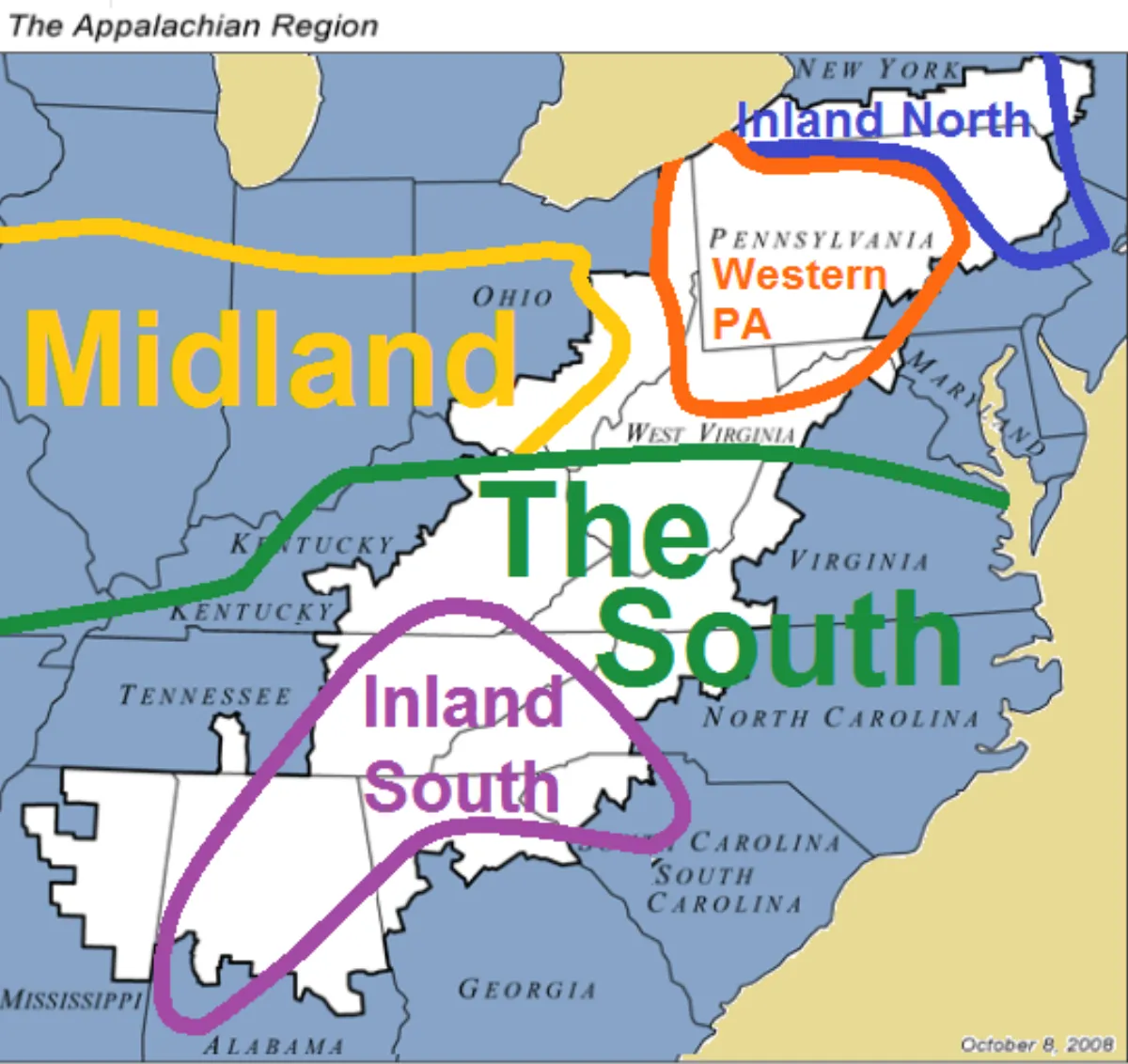
The Appalachian region, stretching from West Virginia through eastern Kentucky and into western North Carolina, is another notable “catsup” zone. Appalachian English is well documented for preserving archaic and variant word forms, and “catsup” fits that pattern perfectly.
New England Holdouts
Surprisingly, a few pockets in New England — particularly rural Maine and Vermont — show modest “catsup” usage. Linguists attribute this to the independent streak of Yankee dialect, which sometimes preserves older forms out of sheer regional pride.
Where “Ketchup” Reigns Supreme
The rest of the country — the West Coast, the Mountain West, the urban Northeast, Texas, and Florida — overwhelmingly uses “ketchup.” Urban areas in general skew heavily toward “ketchup,” likely because of greater exposure to national branding, mass media, and standardized grocery offerings.
International English speakers (British, Australian, Canadian) also almost universally use “ketchup.” The word “catsup” is virtually unknown outside the United States.
Visualizing the Catsup vs Ketchup Map
While we cannot embed an interactive map on this page, the general picture looks like this:
| Region | Dominant Term | Approximate “Catsup” Usage |
|---|---|---|
| Deep South (MS, AL, LA, GA) | Mixed / Catsup-leaning | 25-35% |
| Upper South (TN, KY, NC mountains) | Ketchup-leaning | 15-25% |
| Rural Midwest (IL, IN, IA, MO) | Ketchup-leaning | 15-20% |
| Appalachia (WV, eastern KY) | Mixed | 20-30% |
| New England (rural ME, VT) | Ketchup-dominant | 5-10% |
| West Coast, Mountain West | Ketchup-dominant | <5% |
| Urban Northeast | Ketchup-dominant | <5% |
| Texas, Florida | Ketchup-dominant | <5% |
These figures are estimates synthesized from the Harvard Dialect Survey, Google Trends data, and social-media linguistic analysis. Individual counties and communities may vary widely.
Why the Divide Is Shrinking
The ketchup vs catsup regional divide has been narrowing for decades, and several trends suggest it will continue to shrink:
- National branding: Since every major brand now uses “ketchup,” younger consumers rarely encounter “catsup” on a product label.
- Media homogenization: National television, social media, and internet recipe sites overwhelmingly use “ketchup.”
- Population mobility: As Americans move between regions for work and education, local vocabulary blends and levels out.
- Generational shift: Even in “catsup” regions, younger speakers increasingly default to “ketchup.”
That said, regional vocabulary is remarkably durable. “Catsup” has survived over a century of branding pressure, and it may persist for decades more as a marker of regional identity and family tradition.
Who Says Catsup? A Profile
Based on survey data and linguistic research, the typical “catsup” speaker is:
- Located in the rural South, Midwest, or Appalachia
- Over 40 years old (though not exclusively)
- From a family with deep roots in the region
- Likely to use other regional food terms (e.g., “supper” instead of “dinner”)
Of course, these are generalizations. Plenty of young urbanites use “catsup” out of family habit or deliberate linguistic nostalgia.
Related Reading
Understanding the regional picture is just one dimension of the broader catsup vs ketchup debate. To learn how the two spellings emerged, visit our catsup vs ketchup spelling page. If you are wondering whether the products themselves differ, our catsup vs ketchup taste and ingredients breakdown has you covered. And for help saying the word aloud, check out the catsup pronunciation guide.