
If you have ever stared at a bottle of ketchup and wondered, “when did catsup become ketchup?” you are not alone. The shift from one spelling to the other is one of the most curious episodes in American food history. It was not the result of a single decision or a government decree — it was a gradual transformation driven by commercial branding, regional preferences, and the sheer power of marketing. Understanding when catsup changed to ketchup reveals how language, commerce, and culture intersect in surprising ways.
Two Spellings, One Condiment
To appreciate the shift, you first need to understand that “catsup” and “ketchup” have coexisted for centuries. Both spellings — along with “catchup” — trace back to English attempts to transliterate Asian words for fermented fish sauces. As we cover in our comprehensive guide to the history of catsup, the condiment’s name likely derives from the Hokkien Chinese word kê-tsiap or the Malay word kecap. When English speakers adopted the word in the 1600s and 1700s, there was no standardized spelling, and writers used whichever version struck their fancy.
By the 1800s, “catsup” and “ketchup” had both become well established in American English. Cookbooks, advertisements, and product labels used them interchangeably. If anything, “catsup” had a slight edge in popularity in the United States during much of the 19th century, especially in the South and Midwest. “Ketchup” was more common in New England and in Britain.
The Heinz Effect: Why Did Catsup Become Ketchup?

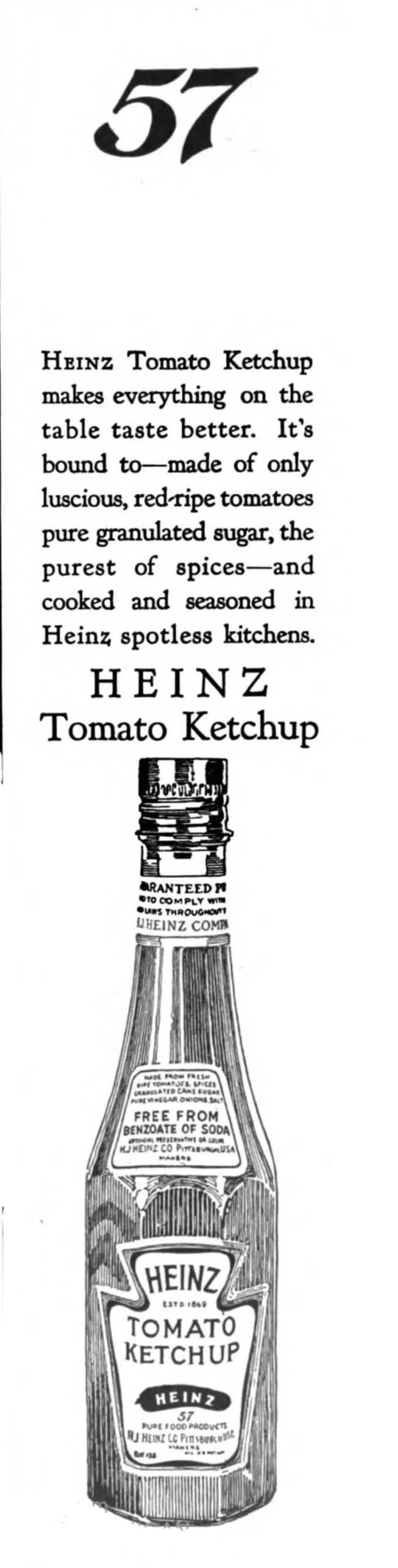
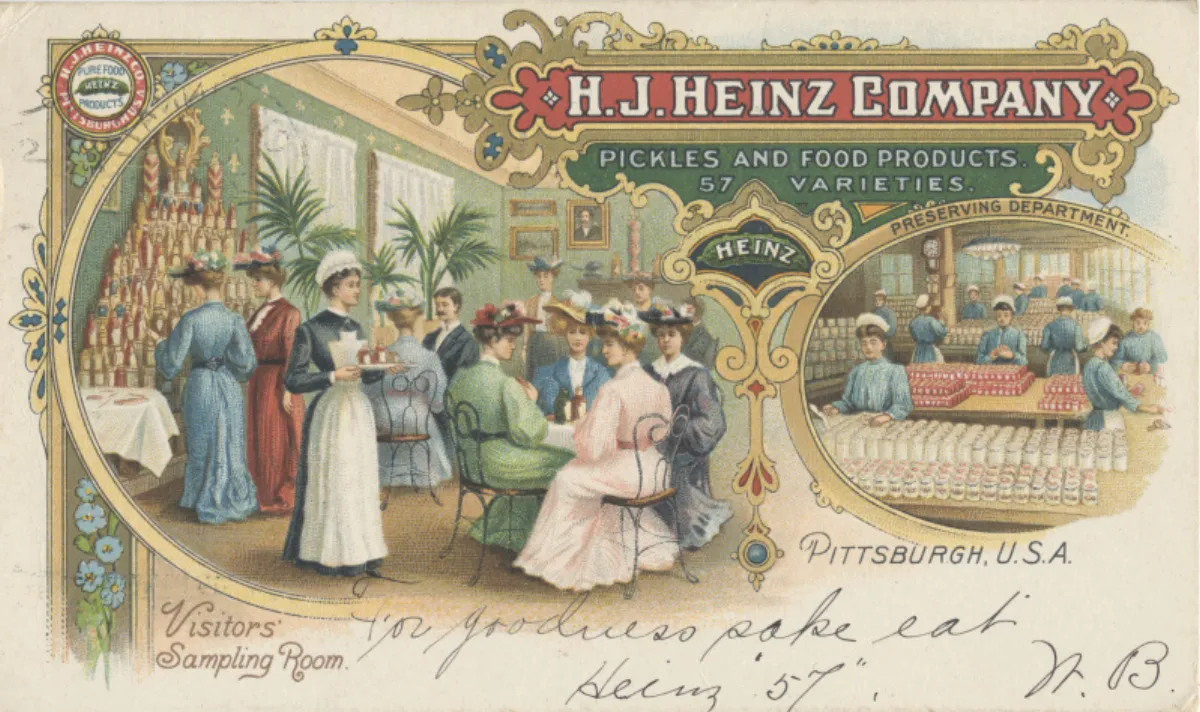
The single most important factor in answering “why did catsup become ketchup” is the H.J. Heinz Company. When Henry John Heinz began mass-producing his tomato condiment in 1876, the company initially used both spellings at various times. Early Heinz labels read “Heinz Tomato Catsup.” However, by the early 1900s, the company had settled firmly on “Ketchup” as its official spelling.
Why did Heinz choose “ketchup” over “catsup”? The historical record does not point to a single dramatic moment of decision. Several theories circulate among food historians. One popular explanation is that Heinz wanted to distinguish his product from competitors who used “catsup” on their labels. By choosing the less common spelling at the time, Heinz could stand out on store shelves and create a stronger brand identity. Another theory suggests that “ketchup” was considered a more phonetically intuitive rendering of the original Asian word, lending the product an air of authenticity and exoticism.
Whatever the reasoning, the effect was enormous. Heinz rapidly became the dominant ketchup brand in America, and as its market share grew, so did the prevalence of the “ketchup” spelling. By the mid-20th century, Heinz controlled such a large portion of the market that its label effectively dictated the standard spelling for the entire country.
The Decline of “Catsup” in the 20th Century
So when did catsup become ketchup in mainstream American usage? The shift was gradual, spanning roughly the 1900s through the 1980s. In the early 1900s, both spellings remained common. Grocery stores stocked products labeled “catsup” alongside others labeled “ketchup.” Regional preferences persisted — many Southern and Midwestern brands stuck with “catsup” well into the latter half of the century.
A few key milestones mark the transition. In 1988, the United States Department of Agriculture (USDA) officially standardized the spelling as “ketchup” in its regulations governing the condiment’s ingredients and labeling. This was less a cause of the shift than a reflection of it — by that point, “ketchup” had already become the overwhelmingly dominant spelling in commercial use and everyday language.
Hunt’s, one of Heinz’s primary competitors, was among the last major brands to use the “catsup” spelling. The company finally switched from “Hunt’s Tomato Catsup” to “Hunt’s Tomato Ketchup” in 1988, the same year as the USDA standardization. This move effectively ended “catsup” as a mainstream commercial label in the United States.
Regional and Generational Holdouts
Even after 1988, the word “catsup” did not vanish overnight. Older Americans who had grown up saying “catsup” continued to use the word in everyday speech. In parts of the South and rural Midwest, “catsup” persisted in spoken language and on the menus of small, family-owned restaurants well into the 2000s. Some heritage and artisanal brands have even revived the “catsup” spelling as a deliberate nod to tradition and Americana.
Language surveys and Google search data from the 2010s and 2020s confirm that “ketchup” now dominates by an overwhelming margin. “Catsup” registers as a tiny fraction of total usage, appearing most often in historical discussions, crossword puzzles, and nostalgic references. The word is not extinct, but it has become a linguistic relic — a marker of an older era of American English.
Why Did Catsup Become Ketchup? A Deeper Look
The question “why did catsup become ketchup” can be answered on several levels. On the surface, it was a matter of branding: Heinz picked “ketchup,” Heinz won the market, and the spelling followed. But underneath that straightforward story lies a more complex interplay of forces.
First, there is the power of standardization. As the American food industry consolidated in the 20th century, there was increasing pressure to standardize labels, ingredients, and terminology. Having two spellings for the same product created confusion for consumers and regulatory headaches for the government. The shift toward a single spelling was, in part, a natural consequence of industrialization and bureaucratization.
Second, there is the role of media. As television advertising became the dominant force in American consumer culture in the 1950s and 1960s, the brands with the biggest advertising budgets shaped not only what people bought but how they talked. Heinz’s television commercials consistently used “ketchup,” reinforcing that spelling in the minds of millions of viewers week after week, year after year.
Third, there is the simple matter of phonetics. “Ketchup” may have prevailed partly because its spelling more closely matches its pronunciation. The “k” sound at the beginning aligns neatly with the hard “k” sound of the spoken word, while “catsup” can be ambiguous — does the first syllable rhyme with “cat” or “ketch”? Over time, the more phonetically transparent spelling won out.
Catsup vs. Ketchup Around the World
It is worth noting that the catsup-ketchup debate was largely an American phenomenon. In Britain, “ketchup” was already the standard spelling by the 19th century. In countries where English is not the primary language, local translations and adaptations bypassed the spelling question entirely. In the Philippines, for example, the dominant condiment is banana ketchup, always spelled with a “k.” In Germany, curry ketchup — a beloved accompaniment to bratwurst — likewise uses the “k” spelling exclusively.
The global dominance of “ketchup” today means that the catsup to ketchup change is complete not only in America but worldwide. International trade agreements, food labeling standards, and the global reach of American brands have all reinforced “ketchup” as the universal standard.
The Legacy of the Catsup Spelling
Though “catsup” has faded from mainstream use, it remains an important part of the condiment’s complete history. The spelling reminds us that language is not fixed — it evolves under the influence of commerce, culture, technology, and taste. The fact that a single company’s branding decision could reshape a word used by millions of people speaks to the extraordinary power of marketing in modern life.
For those curious about the broader story — from ancient Asian fish sauces to the tomato-based condiment we know today — our guide to the history of catsup covers every chapter. And if you have ever wondered about the people behind the product, our page on who invented catsup explores the key innovators who brought this condiment to life.
So the next time someone asks you “when did catsup become ketchup,” you can tell them: it happened gradually, over the course of the 20th century, driven by the dominance of Heinz, the standardization of the American food industry, and the quiet power of a single letter on a label.